16 November 2026
What to Check When Locked Out: A Practical Emergency Guide
Presented by @safeentryguide
Being locked out of your home or business is rarely convenient. It often happens at the worst possible moment, late at night, in a hurry, or when you have left the keys inside and the door has swung shut behind you. In those first few minutes, panic can set in. But staying calm and following a clear set of checks can make the situation far easier to resolve. This guide walks through the key points to consider when you find yourself locked out, whether at a domestic property or a commercial premises.
Stay Calm and Assess the Situation
The first thing to do is take a breath. Rushing leads to mistakes, and mistakes can turn a simple lockout into a costly repair. Look at the door and the lock. Is it a simple latch that has clicked shut, or is there a deadbolt engaged? Is the key still in the lock on the inside? Understanding what type of locking mechanism you are dealing with helps you decide what to do next.
For a domestic property, a common scenario is the latch door that has closed without the key. The latch is spring-loaded and usually retracts when you turn the handle from inside. If you are outside and the door is latched but not deadlocked, there may be a way to slide a thin card or a plastic shim past the latch to push it back. This is a basic technique that sometimes works on older doors or those with a loose fit. It is not a guaranteed method, and it can damage the door frame or the paintwork if done clumsily. If you are not sure what you are doing, it is better to call a professional.
Check for Spare Keys and Alternative Access
Before you do anything else, think about whether there is a spare key somewhere. Do you have a neighbour or a family member nearby who holds a spare? Is there a key safe installed on the property that you can open with a code? For businesses, many commercial premises have a key holder system or a security company that can be contacted. Check your phone contacts or any notes you keep. It sounds obvious, but in the heat of the moment people forget that a spare key exists.
Also consider other entry points. Is there a back door that might be unlocked? A window left ajar? A side gate that leads to a garden where a key might be hidden? Be cautious, though. Climbing through a window can be dangerous, especially if it is high up or if you are not steady on your feet. If you do find an open window, make sure the room is not alarmed. Some commercial properties have intruder alarms that will trigger if a window is opened. If you set off an alarm, you may have to deal with a security response callout fee.
Identify the Lock Type
Once you have ruled out a simple latch or a spare key, look at the lock itself. What kind of cylinder does it have? Many modern doors use a euro cylinder, a standardised lock cylinder that can be replaced easily. If the lock is a euro cylinder, a locksmith can often remove the cylinder without damaging the door. This is a common method for fast non destructive door entry in domestic and commercial settings. The locksmith uses a tool to pull or turn the cylinder, releasing the locking mechanism and allowing the door to open. The cylinder is then replaced, and the door is secure again.
Other lock types include mortice locks, which are common on older wooden doors, and rim locks, often seen on gates or sheds. Each type has its own vulnerabilities and preferred entry method. A mortice lock with a lever mechanism can sometimes be manipulated with a pick or a tension tool, but that requires skill and specialised equipment. For most people, the best approach is to call a locksmith who carries the right tools for the job.
Consider the Risk of Damage
Not all lockout situations are created equal. If you are locked out of a rented property, you need to think about the deposit and the landlord's rules. Drilling a lock or forcing a door can cause damage that you may have to pay for. If you own the property, the cost of repair is still a factor. A fast non destructive door entry is almost always the preferred approach because it avoids the expense and hassle of replacing a damaged door or frame. Locksmiths aim for non-destructive methods first, using tools like bypass tools, picks, or specialised pullers. Only when those fail do they resort to drilling or cutting.

For businesses, the stakes are higher. A broken door or a damaged lock can mean the premises are insecure overnight. That could lead to theft, insurance issues, or health and safety problems. Many commercial doors have high-security locks with drill protection and anti-pick features. These are harder to open without the key, but a good locksmith will have the training to handle them. If you run a business, it is wise to have a relationship with a locksmith before an emergency happens. That way, you know who to call and they already have your details on file.
Verify Your Identity and Ownership
When you call a locksmith, they will need to confirm that you are the owner or an authorised occupant of the property. This is a standard security measure to prevent unauthorised entry. Be ready to provide proof of address, such as a utility bill or a council tax statement, and an identity check like a driving licence or passport. For a business, a company letterhead or a business card may be required. Having these documents to hand can speed up the process. If you are locked out of a business premises and you are not the named key holder, you may need to contact the key holder first. The locksmith will not open the door for someone who cannot prove they have the right to be there.
What to Expect from a Professional Lockout Service
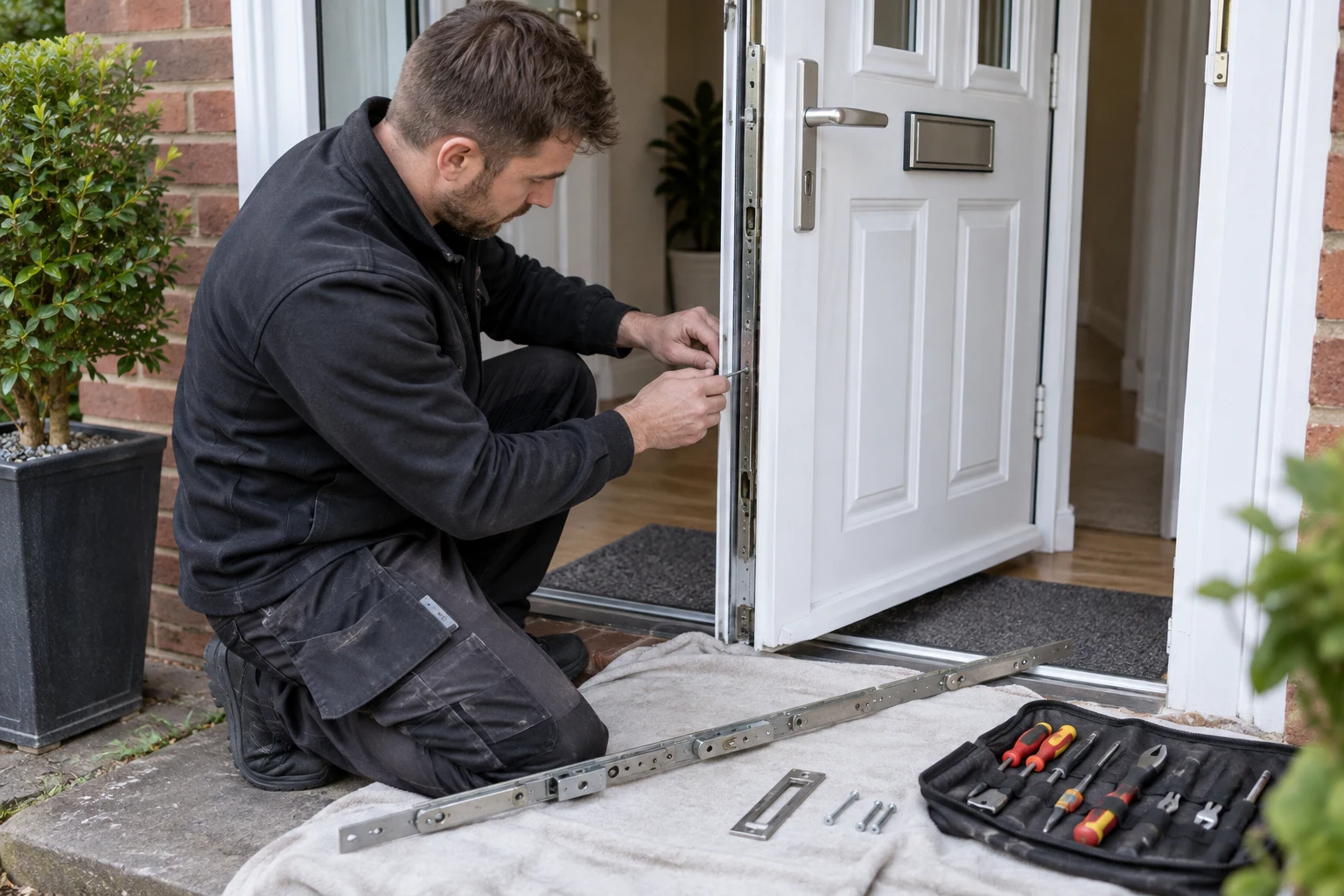
A professional locksmith will arrive with a kit of tools designed for different lock types. They will first attempt a non-destructive method. This might involve lock picking, using a bypass tool, or manipulating the latch through the gap between the door and the frame. If the lock has a euro cylinder, they may use a cylinder puller to extract the cylinder and then operate the lock mechanism directly. This is a clean, quick method that leaves the door intact. Only if these methods fail will the locksmith drill the lock, and even then they will try to minimise damage to the door.
Once you are inside, the locksmith can advise on the condition of the lock and whether it needs replacing. Sometimes a lock that has been picked or manipulated will still work fine. Other times, especially if the lock was old or worn, it may be better to fit a new one. The locksmith can also check the door latch and the overall security of the entry point. This is a good moment to ask about upgrading to a more secure lock or adding a key safe for future emergencies.

Prevention for Next Time
After you are back inside, take a few minutes to think about what caused the lockout. Was it a simple mistake, like leaving the keys on the kitchen table? Or is there a recurring issue with the lock, such as a sticky latch or a worn cylinder? If the lock is faulty, get it repaired or replaced before it fails again. For homes, consider installing a key safe somewhere discreet but accessible. For businesses, have a spare set of keys kept with a trusted employee or in a secure key cabinet. Also, make sure that everyone who needs a key has one, and that there is a clear procedure for what to do if someone is locked out.
Being locked out is stressful, but it is usually a temporary problem. By staying calm, checking for alternatives, and knowing who to call, you can get back inside quickly and with minimal fuss. The key is to avoid panic and to let a professional handle the tricky parts. With the right approach, a lockout becomes a minor inconvenience rather than a major crisis.